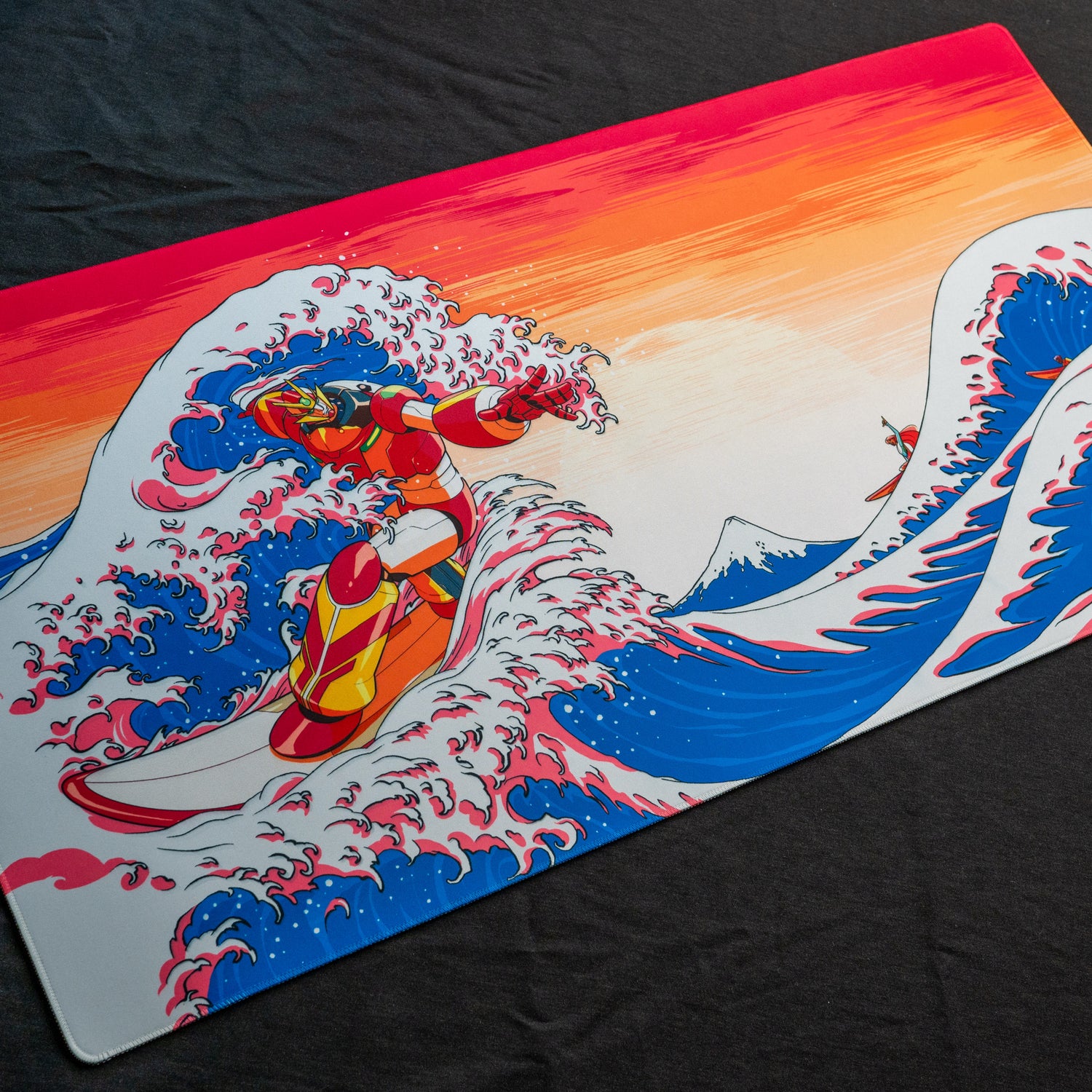
As a general rule, I don’t sign my work. I know, sounds quite un-sane especially these internet days when it’s so easy for lazy so-called artists to steal your work and pass it off as their own, especially since most of my work is online on my Sketch Blog, DeviantArt, and Flickr accounts. It almost sounds like an invitation for others to steal my work, but there is indeed a small bit of method to my madness.
I blame college which is usually the birth place of most crazy ideas, especially crazy arty ones. As an Art Studio major at the University of Marland at College Park, you are forced to take a number of Art History classes and the dreaded Philosophy of Art class. No one I knew looked forward to any of them. The Philosophy of Art class was particularly feared for its incomprehensibility.
I’m a not a particularly well learned person so the philosophy of anything rarely sinks in. I make pretty pictures. I don’t need to know the why behind my pretty picture making. Why do I need to torture my precious brain meats so? Less talky, more arty I always say. But I needed the class to graduate so begrudgingly, I went.
As expected, much of what was discussed in class flew above my head. This was a surprise to me because I do pride myself on possessing a more than basic understanding conversational English. Unfortunately for me, the words that were spoken in class were put in particular orders that made it particularly difficult for me to discern their meaning. I was ready to give up on the class entirely and beg and plead with my adviser to allow me to graduate anyway when the subject of signing came up.
Our professor proudly declared that he never signs his paintings. Never? If a client insists, he will sign on the back, but he never ever puts his signature directly on the face of his work. Up until I heard this, I signed everything! I signed my stupid little sketches on stupid little napkins because I thought, someday I’ll be famous and this shit will be worth something to someone. He said that’s not the point. Once you create your piece, you can no longer claim ownership of the piece. You cannot dictate how other people perceive your piece. The piece is its own entity. You may have been the vessel through which is was created, but once it has been created, it is its own thing.
Let’s see if I can confuse this a bit more. If you have ten witnesses to an accident, you’ll get ten different stories. Each of them will be correct according to their specific points of views. When you put them together, you may even get a story that resembles what actually occurred. Any one of those stories by itself would be both true and untrue, true to the person telling it, untrue to the actual event. Art is like that. We all experience a piece according to our own truth, including the artist. But the piece itself has its own truth. The creator can’t own that truth because the artist is bound by their personal view point. To impose that viewpoint on others does a tremendous disservice to the truth of the piece. In that sense, it’s almost insulting to scrawl one’s name on a piece of art.
Somehow, this idea made sense to me. It’s honestly the only thing I remember from that otherwise incomprehensible class. I have to say, I don’t stick to it nearly as staunchly as our professor. I’ll sign sketches at a convention for people and I usually sign the Super Art Fight pieces that I work on. But for most of my personal work, I rarely scrawl my name.
Do you see your signature as an integral part of your work? Or can you see the value in what our professor was trying to convey?